War Logistics and the Chokepoint of Hormuz
The Price of Passage: Naval Blockades and Iraq’s Triangulation
4/17/20261 min read
Historical Context
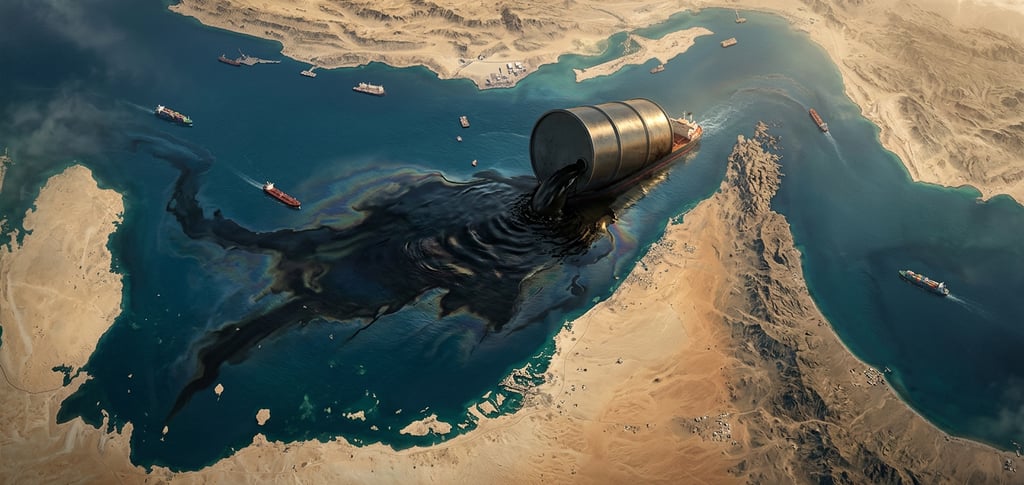
The Strait of Hormuz is the most critical chokepoint in the world. Historically, Iran has used the threat of closing the strait as its primary geopolitical bargaining chip. Currently, the United States is attempting a surgical blockade, targeting only vessels linked to the Tehran regime. Iran’s response is “land triangulation” via Iraq—a sanctions-evasion tactic that dates back to the period of economic isolation following the 1979 revolution.
The effectiveness of this blockade is questioned due to the nature of modern trade. With Iran using “flags of convenience” and ship-to-ship transfers at sea, U.S. monitoring becomes a Herculean and costly task. The use of Iraq as a “logistical lung” allows Tehran to continue exporting part of its production and importing essential components, diluting the direct impact of economic sanctions on the ruling elite.
Moreover, the threat of a blockade in the Bab-el-Mandeb Strait introduces a risk variable for Europe. If Iran and its allies manage to disrupt flows through the Suez Canal, inflation in the Eurozone could reach record levels due to rising energy costs. Logistics thus becomes the primary weapon in this war of attrition, where control over maritime chokepoints means control over the pulse of the global economy.
Financial Analysis
The direct impact is on freight costs and maritime insurance. The fact that Iran can bypass blockades via Oman highlights the porous nature of sanctions. For commodities investors, the key risk is Iran following through on threats to also disrupt the Red Sea, which would force global trade to reroute around Africa.
Social Analysis
Shortages of basic goods are the greatest social concern. In Iran, food inflation disproportionately affects lower-income populations. Globally, rising energy costs fuel public dissatisfaction in countries dependent on fuel imports.
Keywords: Strait of Hormuz, Red Sea, Naval Logistics, Economic Sanctions, Oil Prices, Iraq, Global Trade, Supply Chain Crisis.