The Ormuz Trap: Why Global Inflation is About to Explode (And How to Position)
The market is chasing a 'recovery' mirage while the Strait of Hormuz remains a systemic chokehold. As energy-driven inflation becomes a permanent resident in the US and Europe, we dissect why a diplomatic ceasefire won't fix your portfolio’s logistics nightmare. It’s time to stop betting on headlines and start positioning for a high-rate, high-friction reality
4/19/20263 min read
The Ormuz Chokehold: Why the Global Inflation War is Far From Over
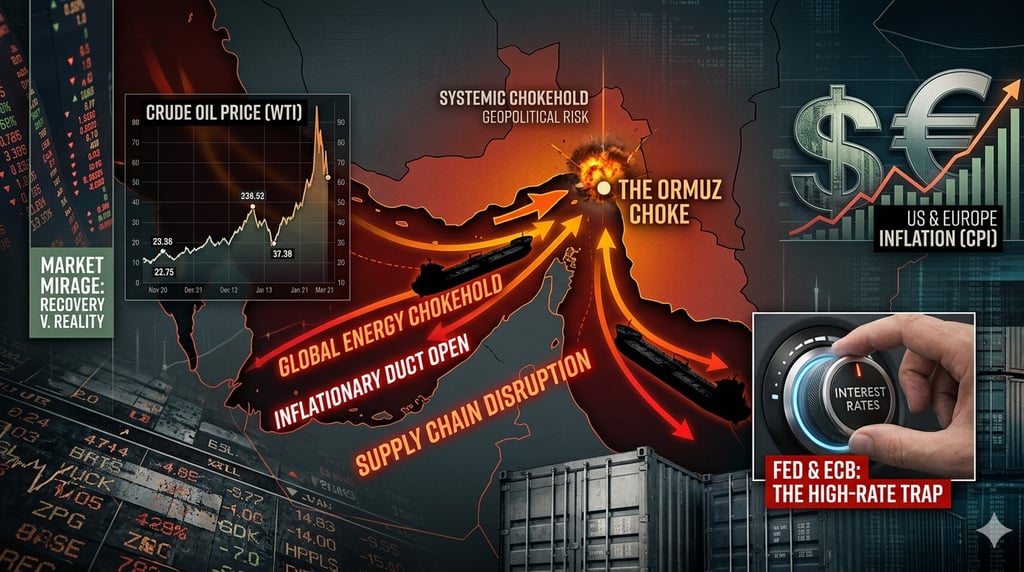
The financial markets are currently addicted to a dangerous drug: the illusion of a "return to normal." While Wall Street celebrates temporary ceasefires and whispers of reopening trade routes, a boots-on-the-ground perspective reveals a far more aggressive reality. We aren't just looking at a "blip" in energy prices; we are witnessing a systemic rewriting of global logistics and inflationary pressures that will haunt the Fed and the ECB for the next 12 to 24 months.
The Logistics Mirage: Peace Doesn’t Lower Oil Prices
The market’s recent rally, spurred by rumors of the Strait of Ormuz reopening, is nothing short of naive. Even if the guns fall silent tomorrow, the logistical nightmare is already baked in.
The Insurance Black Hole: Ask yourself—if you owned a maritime insurance firm, would you cover a $200 million tanker today without a massive premium? The risk of "hit-and-run" attacks hasn't vanished. Higher insurance means higher freight costs, which means higher CPI.
The 90-Day Lag: Supply chains are not light switches. Hundreds of vessels are out of position. It takes weeks, if not months, to recalibrate crew rotations and documentation.
Artificial Floor: Don't expect crude to settle back at $60. With 20% of global oil transiting through a zone that can be closed on a whim by Tehran, the "Geopolitical Risk Premium" is the new permanent floor.
Inflation is "Ligated" to the Global Economy
We are seeing a direct, high-pressure "duct" pumping inflation from energy sectors straight into the veins of the consumer. The latest data from Europe is a canary in the coal mine:
The European Fever: With Spain hitting 3.4% and France accelerating to 1.7% in March, the Eurozone is losing its grip. This isn't "transitory"—it’s a direct result of the energy shock.
The Producer Price Warning: In the U.S., PPI rose 0.5%. When producers pay more, the consumer is the one who eventually gets the bill.
The Wealth Effect Trap: We see this in China, and it’s a warning for the West. When real estate prices stall or fall, the "Wealth Effect" reverses. People stop consuming because they feel poorer. If the Fed keeps rates higher for longer—which they must—the housing market will remain the ultimate drag on Western GDP.
Skin in the Game: Why I’m Selling the "Mess" and Buying the "Moat"
As an investor, I have no time for "academic" diversification. If an asset requires a PhD to understand its restructuring plan, I’m out. I am currently purging my portfolio of anything that smells like a "managed mess"—complex re-orgs, constant shareholder meetings, and shifting management goals.
"I buy brick-and-mortar assets to collect rent, not to study forensic accounting. If I wanted volatility and headaches, I’d go 100% into Altcoins or distressed debt."
The 2t Strategy for 2026:
Aggressive Yield Hunting: We are focusing on "Urban Income" assets—large-scale retail hubs with massive moats and low vacancy. In a world of high inflation, physical space with long-term contracts is the ultimate hedge.
The Treasury "Lock-In": With real rates at these levels, we are aggressively buying long-dated sovereign debt (yielding inflation + 6% in emerging markets or high-coupon Treasuries in the US). We aren't just looking for coupons; we are positioned for the massive capital gains that will come when the central banks are eventually forced to pivot to save the economy from a hard landing.
The Bottom Line
The "ceasefire" rallies are a trap for the retail crowd. For the sophisticated investor, the play is clear: Expect inflation to be stickier, energy to be more expensive, and central banks to be more cornered than the mainstream media wants to admit. Stop looking at the ticker and start looking at the Strait. That’s where the real price of your portfolio is being decided.
Reading Recommendation: If you want to understand why most "experts" keep missing the mark on inflation and global conflict, you need to read Skin in the Game by Nassim Nicholas Taleb. It is the ultimate guide to separating the talkers from the doers in the financial world. Stop taking advice from people who have nothing to lose when you fail.
Keywords: Global Macro Analysis, Energy Crisis 2026, Strait of Ormuz Oil, Fed Inflation Strategy, Real Estate Investment Hedges.