The Green Energy Trap: Why the Transition is a Geopolitical Minefield
The Green Transition Paradox: Trading OPEC Oil for Chinese Minerals
4/20/20263 min read
Green Energy, Red Alert: The Geopolitical Trap of the Energy Transition
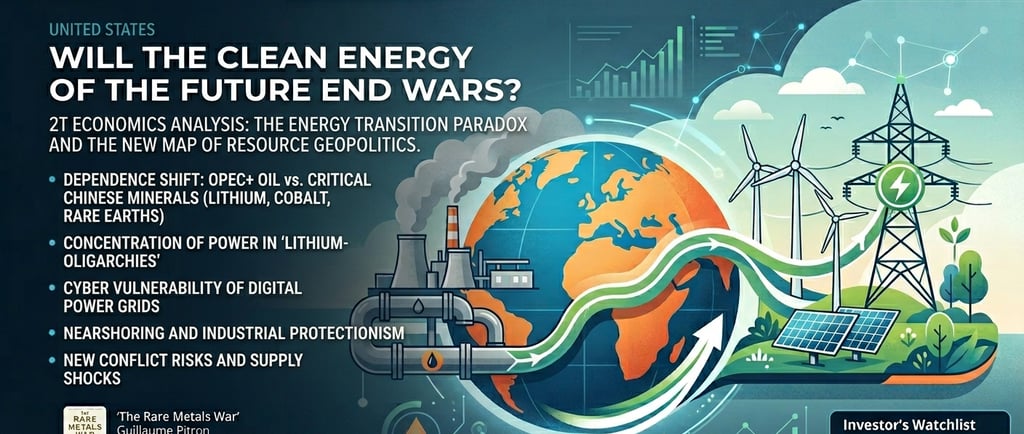
The evidence suggests that the "Green Utopia" being sold to the public is a dangerous strategic illusion. For years, the narrative in Washington and Brussels has been that pivoting away from fossil fuels would finally strip the geopolitical leverage held by petro-dictatorships and unstable regimes in the Middle East and Russia.
A boots-on-the-ground perspective reveals the exact opposite. We aren't escaping geopolitical risk; we are simply trading one master for another, potentially more aggressive, one. As an investor with skin in the game, you need to realize that the transition to "clean" energy is paving a direct path to a new era of resource wars and supply chain blackmail.
The "Banqueting" Petro-States: Why the Old Guard Wins First
Before the "hunger" of obsolescence hits countries like Russia or Saudi Arabia, they are feasting on a geopolitical banquet. The transition isn't an overnight switch; it’s a decades-long overlap where demand for oil remains high but investment in new production drops.
Artificial Scarcity: As Western ESG mandates stifle domestic drilling, global supply concentrates in the hands of the OPEC+ cartel.
The Price of Dependency: We saw this in the wake of the Ukraine invasion. Europe spent over €800 billion just to protect consumers from price shocks caused by Russian gas dependency.
The Saudi Pivot: Riyadh is no longer taking orders from the White House. They’ve recognized their leverage and are playing a "4D Geopolitical Game," aligning closer with China while keeping Western energy security hostage to their production quotas.
From Petro-Dictators to the "Lithium-Oligarchy"
The most staggering oversight in the current policy framework is the concentration of critical minerals. If you thought 15% of the oil market in Russian hands was a threat, look at the math for the "Green" future.
The New Chokeholds
Lithium & Cobalt: Australia and the DRC control the lion's share of raw extraction, but China controls nearly 90% of the refining process. You cannot build an EV or a wind turbine without Beijing’s blessing.
Rare Earth Elements: China has already threatened to retaliate against US semiconductor sanctions by weaponizing its solar panel technology and mineral exports.
The Uranium Gambit: Despite the push for nuclear as a "clean" bridge, Russia remains a dominant force in uranium enrichment. The West is effectively trying to fight a fire while buying the water from the arsonist.
The Resilience Paradox: Digital Vulnerability
As we electrify everything, we move from a world of physical fuel risks to cyber-kinetic risks. A "Green" grid is a hyper-connected, digitized grid, and that is a massive target for state-sponsored hackers.
Intermittency Issues: Solar and wind are fickle. When the sun doesn't shine, the grid needs a "buffer." Currently, that buffer is gas or coal. To replace them, we need massive battery arrays—bringing us right back to the Chinese mineral monopoly.
Strategic Reserves: The US Strategic Petroleum Reserve (SPR) is at historic lows. In a world of "Friend-shoring" and fragmented markets, the lack of a physical energy cushion leaves Wall Street and the broader economy exposed to unprecedented volatility.
The Investor’s Bottom Line: Fragmented Markets
The push for "Inflation Reduction Acts" and European subsidies is creating a surge in protectionism. While politicians call it "sovereignty," the market calls it fragmentation.
By closing markets to ensure "domestic" green production, we are losing the efficiency of global trade. This isn't just about saving the planet anymore; it's a cold-blooded race for industrial dominance where energy is the primary weapon. If your portfolio isn't hedged against a permanent shift in geopolitical leverage toward the East, you aren't paying attention.
Deep Dive: The Material Reality of the Virtual World
To truly grasp the scale of the strategic trap we are walking into, there is no better guide than Guillaume Pitron’s The Rare Metals War. While the West celebrates its transition to a digital and green "immaterial" economy, Pitron exposes the brutal physical reality: our clean energy future is built on a foundation of rare metals controlled by a handful of players. This isn't just an environmental critique; it is a masterclass in geopolitical realism. Pitron reveals how we have outsourced the "dirty work" of mining to the East, effectively handing them the keys to our industrial sovereignty. For any investor or strategist trying to navigate the next decade, this is a mandatory read to understand why the "Green Revolution" might be the most expensive geopolitical gamble in history.
Check it out on Amazon: The Rare Metals War: The Dark Side of Clean Energy
Keywords: Energy Transition Geopolitics, Critical Minerals Monopoly, China Green Hegemony Strategic Energy Security, Petro-state Leverage, EV Battery Supply Chain Macroeconomic Impact of Decarbonization, Inflation Reduction Act Analysis, Cyber-Grid Vulnerability