
The Breaking of a 34-Year Silence: Israel, Lebanon, and the Border of Uncertainty
The Historic Reencounter in the Levant
4/17/20262 min read
Historical and Geopolitical Context
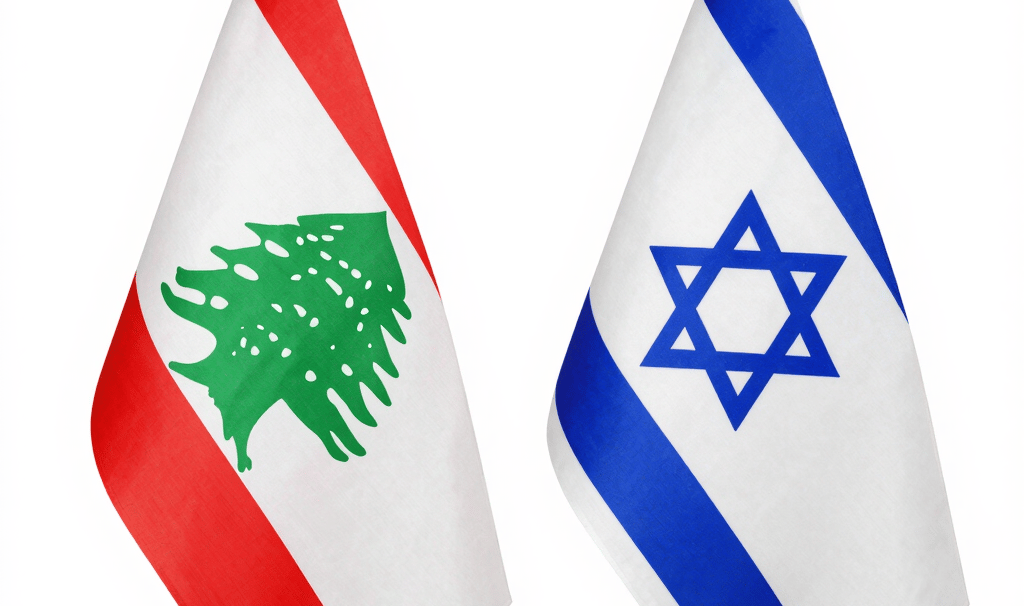
The meeting between the Lebanese head of government and the administration of Benjamin Netanyahu is not merely a diplomatic event; it is an attempt to close a cycle of hostilities that dates back to the Lebanese Civil War and the 1982 operation "Peace for Galilee." Israel occupied southern Lebanon for nearly two decades (until the year 2000), a period during which Hezbollah emerged not only as a militia but as a “state within a state.” The current dispute over the UN “Blue Line” reflects the absence of an officially demarcated border—something that continues to hinder institutional stability in the region.
Beyond the territorial issue, the dialogue signals a shift in the regional balance of power. For the first time, Lebanon’s official government is attempting to reclaim protagonism from militias in order to negotiate directly over the sovereignty of its natural resources, such as gas fields in the Mediterranean. If this movement succeeds, Lebanon may cease to be a pawn in the hands of external powers and instead become a sovereign actor—although the path forward will require the difficult disarmament of groups that currently possess greater firepower than the Lebanese National Army itself.
This normalization process faces skepticism from ultraconservative factions on both sides. In Israel, the nationalist right views any territorial concession with distrust; in Lebanon, Iranian influence through Hezbollah acts as a centrifugal force, pulling the country back toward conflict whenever an agreement appears close. The sustainability of this dialogue will therefore depend on international guarantees that go beyond mere diplomatic rhetoric.
Financial Analysis
From a market perspective, Lebanon is currently a case study in systemic risk. With an economy in collapse and a devalued currency, any sign of border stabilization is seen as a positive driver for future external debt renegotiations. However, execution risk remains extremely high: if the Lebanese state fails to disarm Hezbollah as required by Resolution 1701, foreign capital will continue to flee Beirut.
Social Analysis
The Lebanese population lives in a state of dichotomy. On one hand, there is a desire for sovereignty and an end to Israeli incursions; on the other, there is social dependence on services provided by Hezbollah. A peace agreement that ignores the social integration of these groups may result in new internal civil conflicts.
Keywords: Geopolitics, Lebanon, Israel, Resolution 1701, Hezbollah, Middle East, Regional Stability, Maritime Border, Peace in the Levant.