The AI Infrastructure Supercycle: Why the 'Plumbing' is a Better Bet Than the Bot in 2026
4/24/20263 min read
The AI Gold Mine: Why Infrastructure is the Only "Sure Bet" in the 2026 Race
The artificial intelligence race is currently moving trillions of dollars globally. But for the serious investor, the question isn't just "Who is building the best bot?" but rather "Where should I put my capital to capture this growth over the long term?" A boots-on-the-ground perspective reveals that while everyone is obsessed with the "face" of AI—the chatbots—the real, sustainable alpha is being generated in the physical layers that keep these models alive. At 2t Economics, we believe that the smartest play is not chasing the hype of the final application, but owning the infrastructure.
The "Front-End" Illusion: High Growth, Low Moats
As of April 2026, the AI user landscape is dominated by a few major players. However, investing in them isn't as straightforward as it seems.
Market Share Distribution: ChatGPT remains the leader with 38.7%, followed by Gemini (25%), Grok (13.5%), and Claude (10%).
The IPO Bottleneck: Heavyweights like OpenAI and Anthropic are still private. While IPOs are rumored for late 2026, the only way to play them now is indirectly (e.g., Microsoft owning 27% of OpenAI).
The "Performance Ceiling": We are reaching a point where models will stabilize in quality. When that happens, the battle moves from "who is smartest" to "who is cheapest and most efficient."
The evidence suggests that the "user-facing" layer has a low barrier to entry. A new model can explode in months (as Claude did in 2025-2026), making these investments highly volatile.
The Three Pillars of the AI Infrastructure Supercycle
If you want to win with AI without betting on which bot survives, you must invest in the plumbing. Infrastructure is less volatile and remains essential regardless of which software wins.
1. The Power Surge: Energy is the New Oil
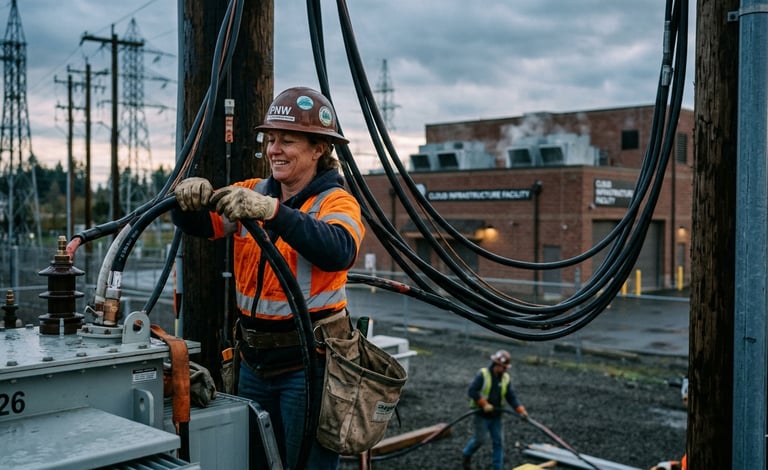
AI agents consume an astronomical amount of power. By 2030, data center energy demand is projected to reach unprecedented levels. Governments cannot subsidize this forever, forcing tech giants to become their own utility providers.
The Nuclear Option: There is a massive shift toward sustainable, high-efficiency energy. The Uraniuam ETF (URA) and companies involved in nuclear mining are seeing record demand.
Strategic Partnerships: Google and Amazon are now acquiring energy firms (like Talen Energy) to fuel their AWS and Cloud expansions.
Play: Look at the Utilities Select Sector SPDR Fund (XLE) or specialized Uranium plays.
2. Semiconductors: The Toll-Booths of Progress
Whethr it’s a medical AI or a chatbot, it requires chips. This is a market heading toward a $1 trillion valuation by the end of the decade.
The Dominant Players: Nvidia and TSMC are the obvious picks, but the sector is broadening.
The ETF Approach: * SOXX: Broad exposure to 30 semiconductor leaders.
SMH: A more concentrated, high-conviction bet on Nvidia and Broadcom.
The Bottom Line: Every hardware advancement in AI directly benefits the chip manufacturers.
3. Data Centers and Real Estate (REITs)
Data centers are the physical homes of the internet. In 2026, companies like Equinix report 100% occupancy rates; even facilities still under construction are already fully leased.
Digital Realty & Equinix: These are the "landlords of AI." They collect rent from everyone from OpenAI to the federal government.
Play: The Data Center REITs & Digital Infrastructure ETF (SRVR) offers a diversified way to own the literal walls and cooling systems of the digital age.
The "Fiber Optic" Lesson: Skin in the Game
History provides a perfect analogy: the fiber optic boom of the late 90s. Companies like Verizon and AT&T laid thousands of miles of cable that went unused for years because the tech wasn't ready. When the internet finally caught up, the infrastructure was already there to handle the surge.
AI data centers are the "fiber optics" of 2026. If the AI hype cools down tomorrow, those centers will still be needed for cloud computing, 6G, and whatever comes next. The hardware is the hedge.
Editor's Verdict: Focus on the "Bolo"
At 2t Economics, our strategy is clear: Own the base. We are heavily allocated in chips, cooling systems (like Vertiv), and energy. These sectors don't care which AI model you prefer; they get paid regardless.
As we navigate the rest of 2026, remember: don't just invest in the "intelligence"—invest in the "artificial" physical world that makes it possible.
Keywords: "AI Infrastructure," "Supercycle," and "2026" are high-velocity search terms.