
Oil Prices Retreat: Iran Reopens Strait of Hormuz Amid Fragile Middle East Ceasefire
Oil prices drop to $89 as Iran reopens the Strait of Hormuz following a fragile Israel-Lebanon ceasefire. But with the U.S. naval blockade still in place and nuclear tensions rising, is this a true market recovery or just a temporary pause in a global energy crisis?
4/17/20262 min read
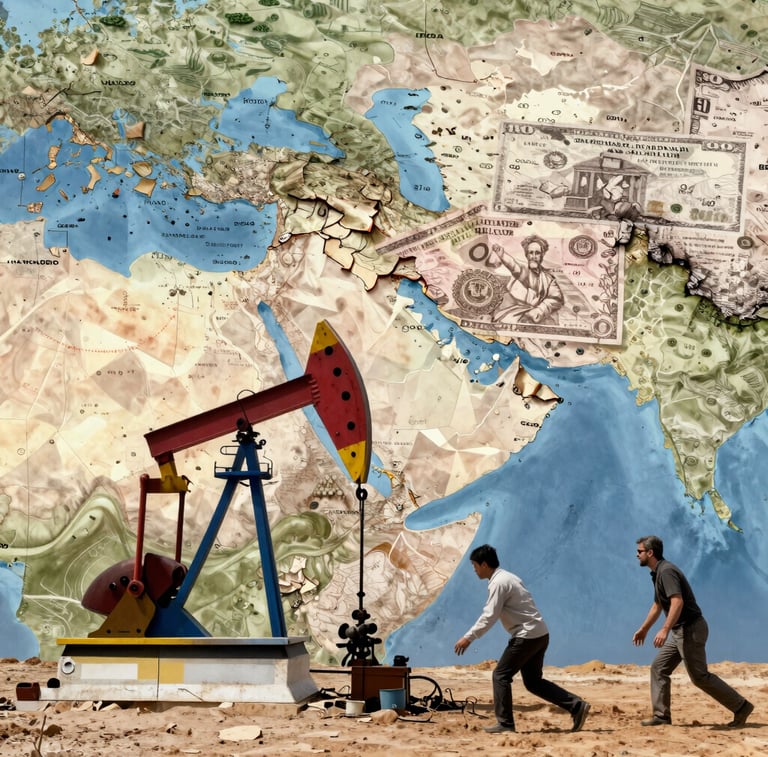
Hormuz Reopens: A Fragile Peace and the "Trump Factor" in the Global Oil Market
The global energy market breathed a collective sigh of relief this Friday as Iran announced the reopening of the Strait of Hormuz. The decision follows a 10-day ceasefire agreement between Israel and Hezbollah, a key Iranian demand to de-escalate the naval blockade that has choked one of the world’s most vital oil arteries.
However, despite the optimistic rhetoric coming from the White House, the situation on the ground—and in the water—remains dangerously volatile.
Market Reaction: Oil Prices Retreat
The impact of the announcement was immediate. Crude oil prices, which had soared past $100 per barrel during the height of the crisis, tumbled to $89 following the news. President Donald Trump has used the reopening as a signal of a "near-end" to the conflict, seeking to stabilize global inflation and reassure nervous markets.
Yet, radar images reveal a different story: a massive backlog of tankers remains stationary on both sides of the Strait. Shipping companies, wary of the persistent risk of localized skirmishes or sudden reversals in policy, are hesitant to proceed until safety is 100% guaranteed.
The "Maximum Pressure" Stalemate
The primary obstacle to a permanent solution is the ongoing U.S. naval presence. President Trump has stated that American military assets will remain in the Persian Gulf until a comprehensive deal is finalized. In response, Tehran has threatened to resume the shutdown if the U.S. blockade isn't lifted.
The "deal" itself is shrouded in skepticism:
The Nuclear Question: Trump claims Iran has agreed to halt uranium enrichment for 20 years. However, Iran’s Foreign Ministry has flatly denied this, creating a significant diplomatic rift before the next round of talks in Islamabad, Pakistan.
Frozen Assets: Iran is demanding the release of billions in frozen overseas assets as a condition for peace—a demand Washington has yet to fully concede.
The "Netanyahu" Variable: Despite the ceasefire, reports of continued Israeli strikes in Southern Lebanon suggest that containing regional tensions is easier said than done. Benjamin Netanyahu remains committed to an "expanded security zone," which Hezbollah and Iran view as a violation of the truce.
What’s at Stake for the Global Economy?
The Strait of Hormuz is the transit point for roughly 20% of the world’s oil consumption. Any "reopening" that is subject to immediate reversal creates a "risk premium" that keeps energy prices unstable.
While the drop to $89 is a positive sign for consumers in the U.S. and Europe, the underlying fundamentals suggest that we are not out of the woods. The Islamabad summit this weekend will be the true litmus test: will it be a historic peace treaty or just a temporary pause in a much larger confrontation?
For now, the world watches the Persian Gulf with cautious optimism, but with one hand firmly on the "panic button."
Keywords: Strait of Hormuz, Iran, Donald Trump, Oil Prices, Israel-Lebanon Ceasefire, Geopolitics, Energy Market, Uranium Enrichment, Global Economy, Persian Gulf, Crude Oil, Islamabad Summit.