
Global Geopolitical Escalation: US–Iran Conflict, Russia-Ukraine Tensions, and Energy Market Shock Risks
US–Iran tensions, Russia-Ukraine escalation, and NATO fiscal shifts are reshaping oil markets, defense spending, and global macro risk pricing.
5/27/20263 min read
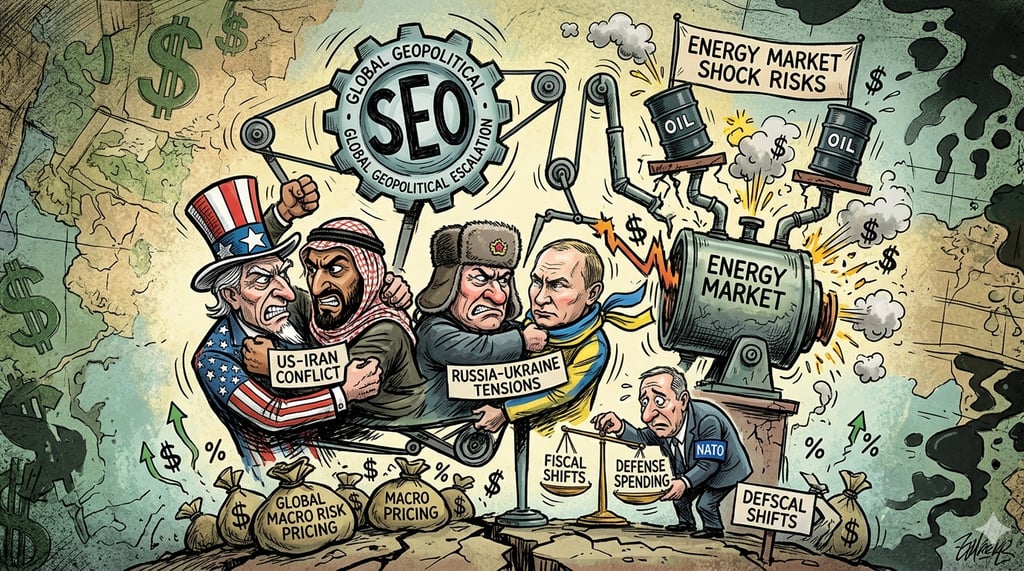
Geopolitical Risk Premium Re-Prices Global Macro Conditions as Multi-Front Escalation Tests Energy, FX, and Defense Markets
Global markets are increasingly being forced to price not a single geopolitical shock, but a synchronized escalation across the Middle East, Eastern Europe, and parts of Latin America. The underlying thesis emerging from recent developments is clear: containment frameworks are weakening, while state actors are increasingly willing to test escalation thresholds even under nominal ceasefire conditions.
For macro investors, the immediate transmission channels are concentrated in three areas: energy shipping risk (notably the Strait of Hormuz), European defense fiscal expansion, and sovereign risk dispersion in emerging markets.
Middle East: US–Iran Confrontation Raises Energy Supply Tail Risk
Facts (as reported in the transcript)
The United States conducted strikes against Iranian maritime assets and air defense positions, with limited but deliberate scope.
Iran alleges violation of a ceasefire arrangement and asserts its right to retaliate.
Tensions are centered around the Strait of Hormuz, where maritime security risks—including potential mine deployment—are rising.
Israel continues military operations in Lebanon and signals potential escalation against Hezbollah, despite fragile ceasefire conditions.
Market-Relevant Interpretation
The key macro variable is not tactical military success, but shipping risk in a corridor responsible for ~20% of global oil flows.
For Wall Street pricing models, the relevant channels are:
Brent crude risk premium expansion (geopolitical + insurance costs)
LNG shipping rerouting costs (Europe exposure)
Elevated tanker freight rates due to insurance repricing
Short-term USD support via risk-off flows
The strategic concern is not full closure of Hormuz, but persistent harassment risk, which is sufficient to structurally lift energy volatility without requiring outright supply disruption.
Speculative but Market-Important Insight
If Iran moves toward asymmetric maritime disruption (mines, drone harassment, or inspection regimes), the oil market could transition from “event-driven spikes” to a structurally higher volatility regime, similar to post-2022 Russia sanctions dynamics.
Israel–Lebanon Front: Persistent Multi-Theater Pressure in the Levant
Facts
Israel is reportedly intensifying operations against Hezbollah-linked infrastructure in Lebanon.
Ceasefire arrangements are described as fragile and incomplete.
Expansion of operations into adjacent territories is contributing to regional instability.
Macro Interpretation
This front reinforces a broader structural theme: the Middle East is no longer operating under de-escalation equilibrium.
For macro pricing:
Sustained risk premium in crude oil
Elevated defense equities in US and Europe
Continued inflows into energy majors as geopolitical hedges
Unlike previous cycles, markets are increasingly treating Middle East instability as baseline, not tail risk.
Russia–Ukraine: Escalation Signals and NATO Fiscal Friction
Facts
Russia has reportedly warned US diplomats and citizens to leave Kyiv ahead of anticipated intensified strikes.
Ukraine continues to conduct long-range drone operations impacting Russian infrastructure, including energy assets near Moscow.
NATO leadership (referenced via Mark Rutte) has proposed member contributions around 0.25% of GDP to support Ukraine, facing resistance in several European states.
Interpretation
The conflict is entering a phase characterized by:
Deepened attritional warfare
Expanded civilian risk signaling
Increasing divergence within NATO on funding burden-sharing
For European macro conditions:
Defense spending is becoming semi-structural fiscal expenditure
Bond markets face gradual repricing of long-term fiscal trajectories
Eastern European sovereigns remain relative beneficiaries of capital inflows tied to defense integration
Speculative Insight
If US financial and military support continues to plateau, Europe may be forced into a self-funded defense acceleration cycle, which has historically correlated with higher term premiums in sovereign bond markets.
Latin America: Bolivia Political Instability and Brazil’s Mediation Role
Facts
Bolivia is experiencing domestic unrest following austerity-oriented policy adjustments under a new administration.
Protests involve labor groups and indigenous communities, with accusations of political destabilization.
Brazil is engaging diplomatically and providing humanitarian assistance coordination.
Macro Interpretation
While not systemically significant globally, Bolivia reflects a broader EM pattern:
Fiscal consolidation → social fragmentation
Commodity-dependent economies → political volatility under adjustment regimes
Brazil’s role signals:
Regional diplomatic leadership consolidation
Soft power expansion through humanitarian coordination rather than financial dominance
Cross-Asset Macro Implications
1. Energy Markets
Persistent upside skew in oil prices
Elevated volatility floor
Increased importance of shipping insurance spreads
2. FX Markets
USD retains structural safe-haven demand
EUR remains vulnerable due to energy exposure and defense fiscal expansion
EM FX dispersion increases sharply (commodity exporters vs importers diverge)
3. Fixed Income
US Treasuries benefit episodically from risk-off flows
European sovereign yields face upward pressure from defense spending commitments
Credit spreads remain sensitive to energy shocks
4. Equities
Defense sector continues structural outperformance (US + EU)
Energy majors maintain geopolitical hedge premium
Airlines and industrial shipping remain vulnerability nodes
Key Takeaways for Investors
The global system is transitioning from isolated conflicts to multi-front geopolitical pressure
Energy markets are the primary transmission mechanism across all regions
NATO fiscal policy and Middle East maritime risk are becoming core macro variables, not peripheral risks
Emerging markets are increasingly sensitive to domestic fiscal tightening under political fragmentation
Recommended Book
For understanding how geopolitical fragmentation reshapes macroeconomic cycles, a highly relevant read is: “The New Map: Energy, Climate, and the Clash of Nations” by Daniel Yergin
It provides a framework for interpreting how energy corridors, national strategy, and resource security interact—directly aligned with the current Middle East and Eurasian risk environment.
Link: https://amzn.to/49TXB3E